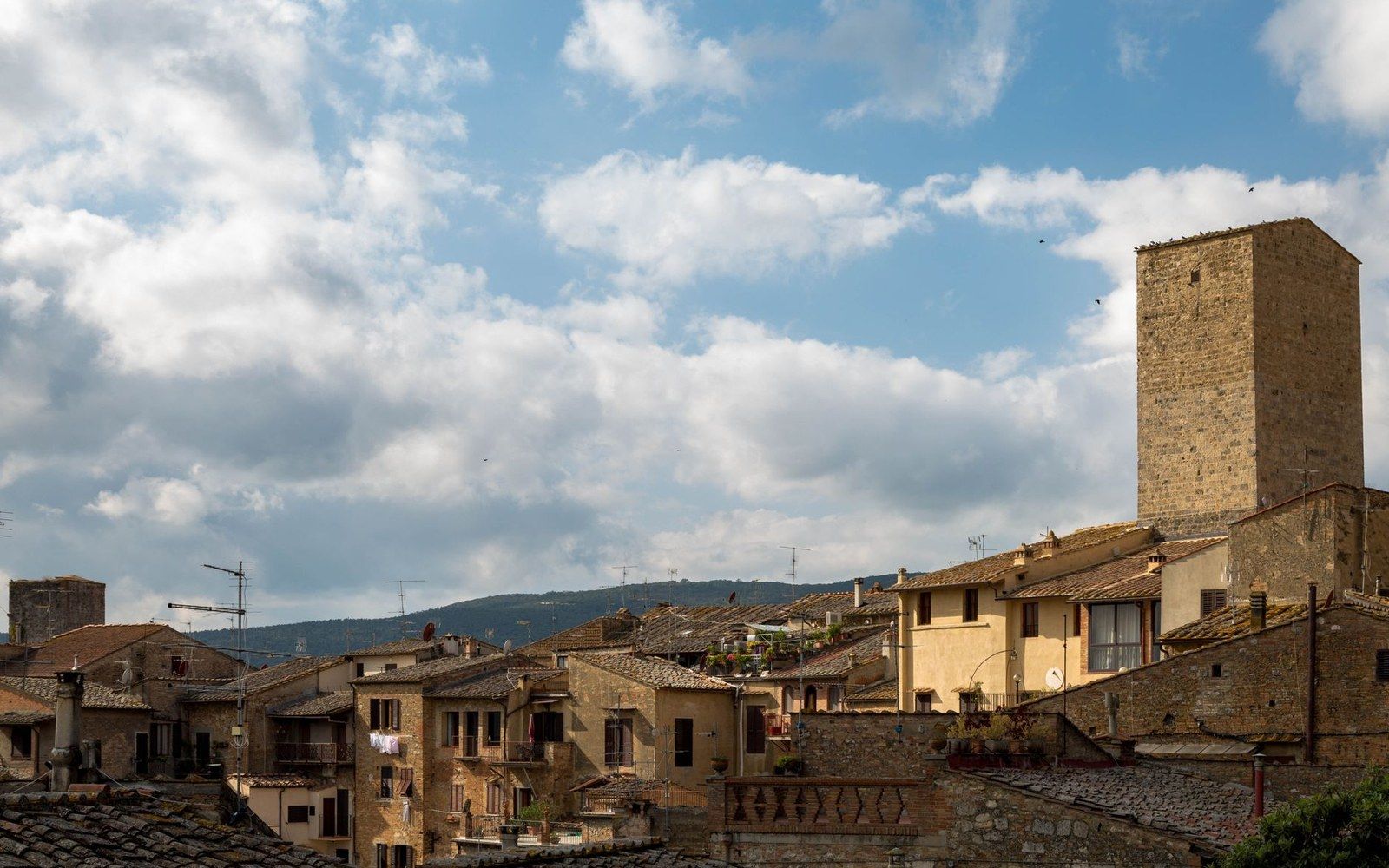
They were not built to fight from — and anyone who tried to fight from one quickly discovered that.
The towers that still bristle above San Gimignano and once crowded Bologna, Florence, and Pisa were never serious military installations. An archer at the summit commanded a fine view and very little else: the apertures were small, the stairwells narrow enough to be murderous for the defender moving fast in armour, and the walls, though thick, were unbattered and unsupported by flanking fire. A besieging party could simply sit at the base and wait.
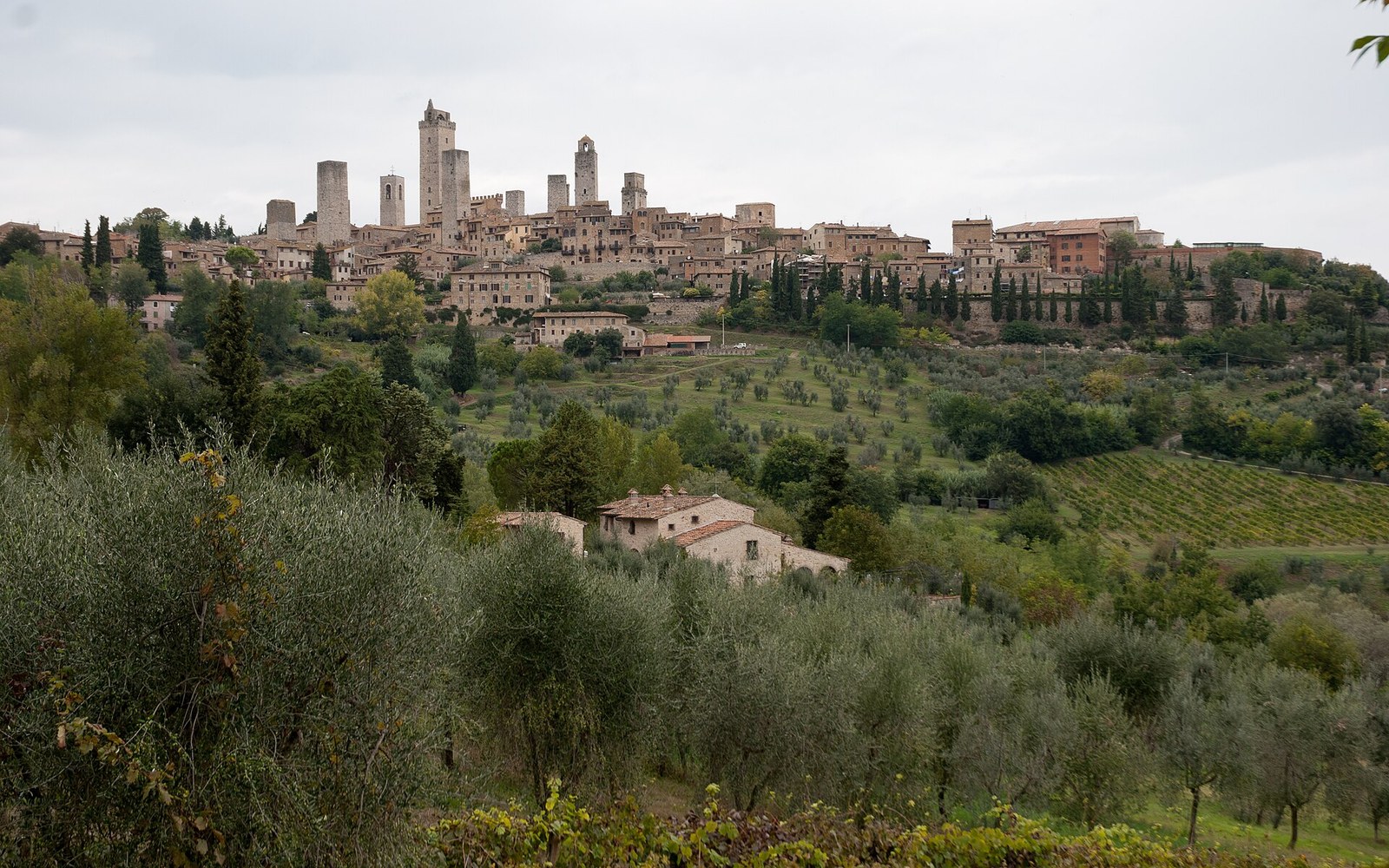
What towers were, instead, was a legible claim. In the Italian comune — the self-governing city — a family's political weight needed a physical form, and height was its most unambiguous expression. Building taller than your neighbour was an argument conducted in travertine and pietra forte. The cost alone — quarrying, transport, the sheer mass of material per vertical metre — communicated that a lineage had resources and credit networks reaching beyond the neighbourhood. The Arte della Lana and comparable merchant guilds channelled the wool fortunes of Tuscany and the Po valley partly into stone that could be read from two streets away.
The tower as social instrument
| Item | What the record says |
|---|---|
| comune | the self-governing Italian city-state, the political frame within which tower-building was competitive |
| Arte della Lana | the wool merchants' guild; merchant wealth is a direct engine of tower construction |
| Guelf and Ghibelline | the factional divide whose periodic violence made a refuge above street level valuable |
| Ambrogio Lorenzetti, Allegory of Good Government (Palazzo Pubblico, Siena, 1337–40) | towers appear as markers of civic texture, not military apparatus |
Towers also served as warehouses. Grain, wool, dyestuffs, and coin could be secured against street-level riot and fire by hauling them up through trap-doors; the upper storeys functioned as strongrooms elevated above the reach of an angry crowd. In a city where factional violence — the grinding conflict of Guelf and Ghibelline — could erupt with days rather than weeks of warning, that mattered.
And in genuine extremity, a tower provided a last refuge: not a military stronghold but a bolt-hole above the mob. Doors could be barred at the ground, ladders withdrawn. The structure bought time, not victory. Ambrogio Lorenzetti's painted city in the Palazzo Pubblico in Siena shows towers as background furniture to civic order — which suggests contemporaries understood them as social rather than tactical objects, elements of the urban skyline that declared who the city was made of, rather than instruments for its defence.
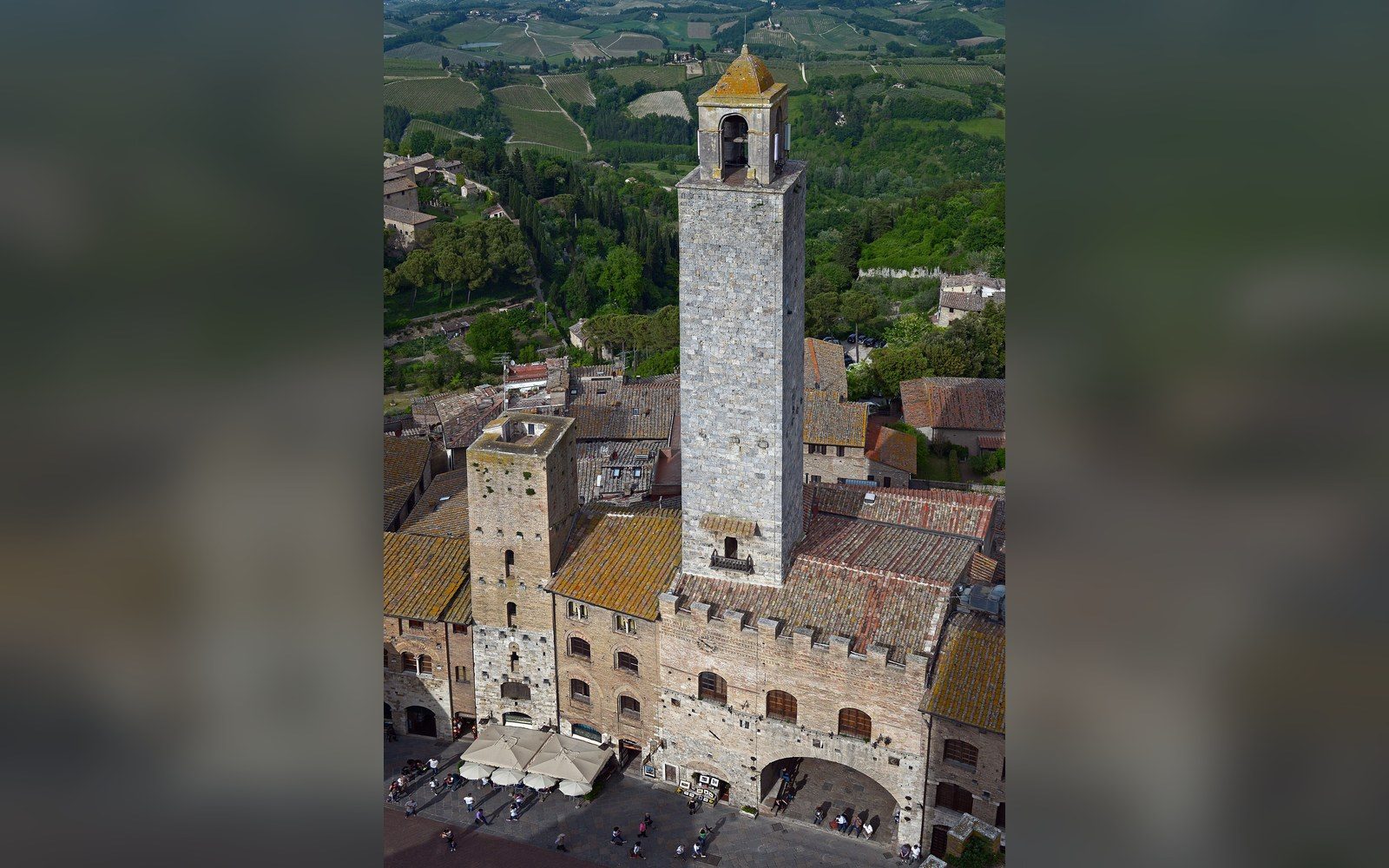
The commune eventually recognised the arms race for what it was and began legislating maximum heights. The towers were already making the point they had always been built to make.