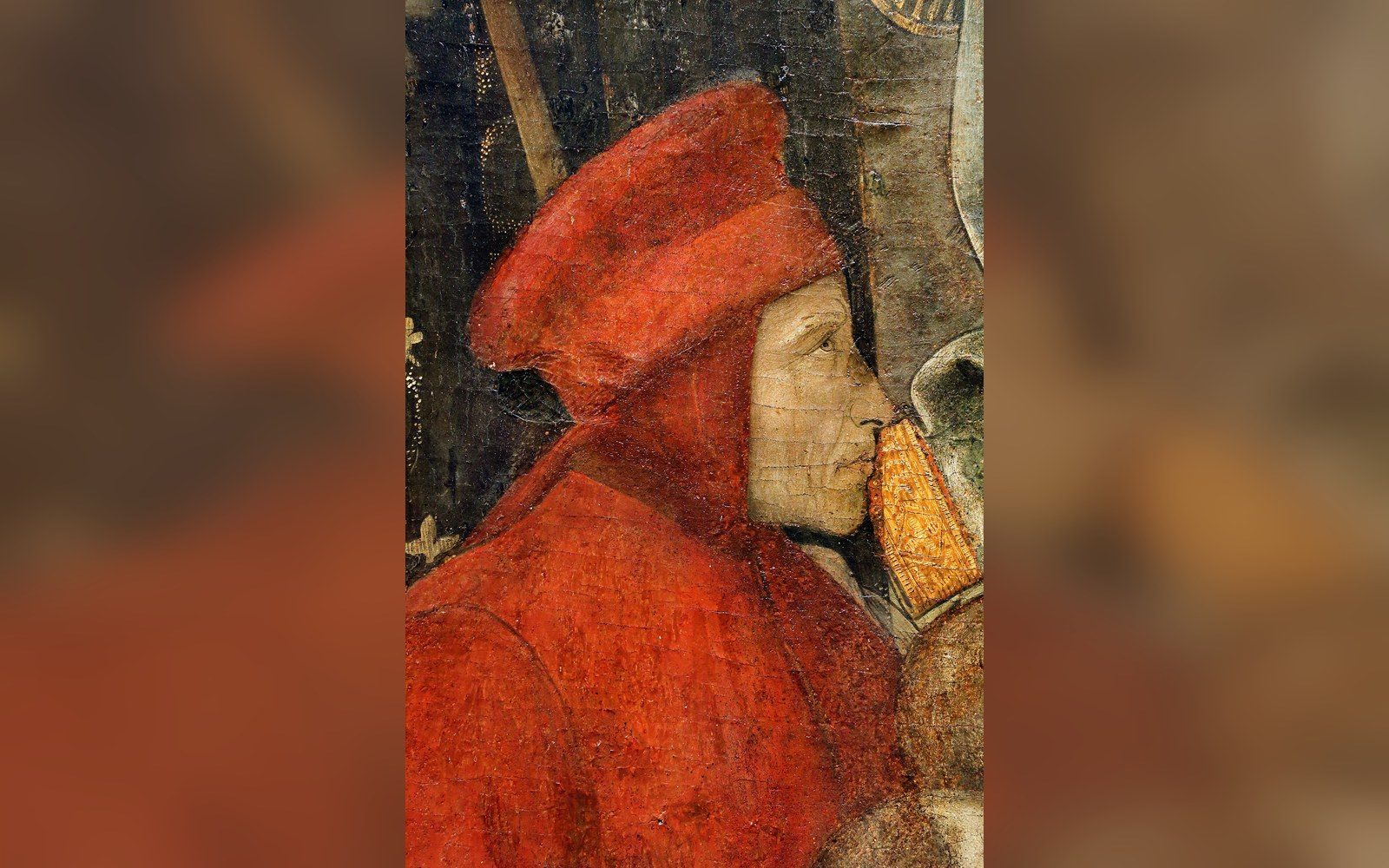
Francesco di Marco Datini was born in Prato, in Tuscany, around 1335, and died there in 1410. Between those dates he built a trading network that stretched from Avignon to Barcelona, from London to the Levant, moving cloth, wool, dyes, spices, arms, and money across a continent still rebuilding after the Black Death. He was not, by the standards of the Florentine banking dynasties, the wealthiest man of his age. What made him singular was a habit of mind: he kept everything. When Datini died, he left his house in Prato to a charitable foundation he founded, the Ceppo dei Poveri, and inside that house, walled up in a cavity beneath the staircase, lay the entire paper archive of his commercial life — roughly 150,000 letters, around 500 ledgers, account books, insurance contracts, bills of lading, notarial records, and the scattered private correspondence of a man who worried constantly and in writing.
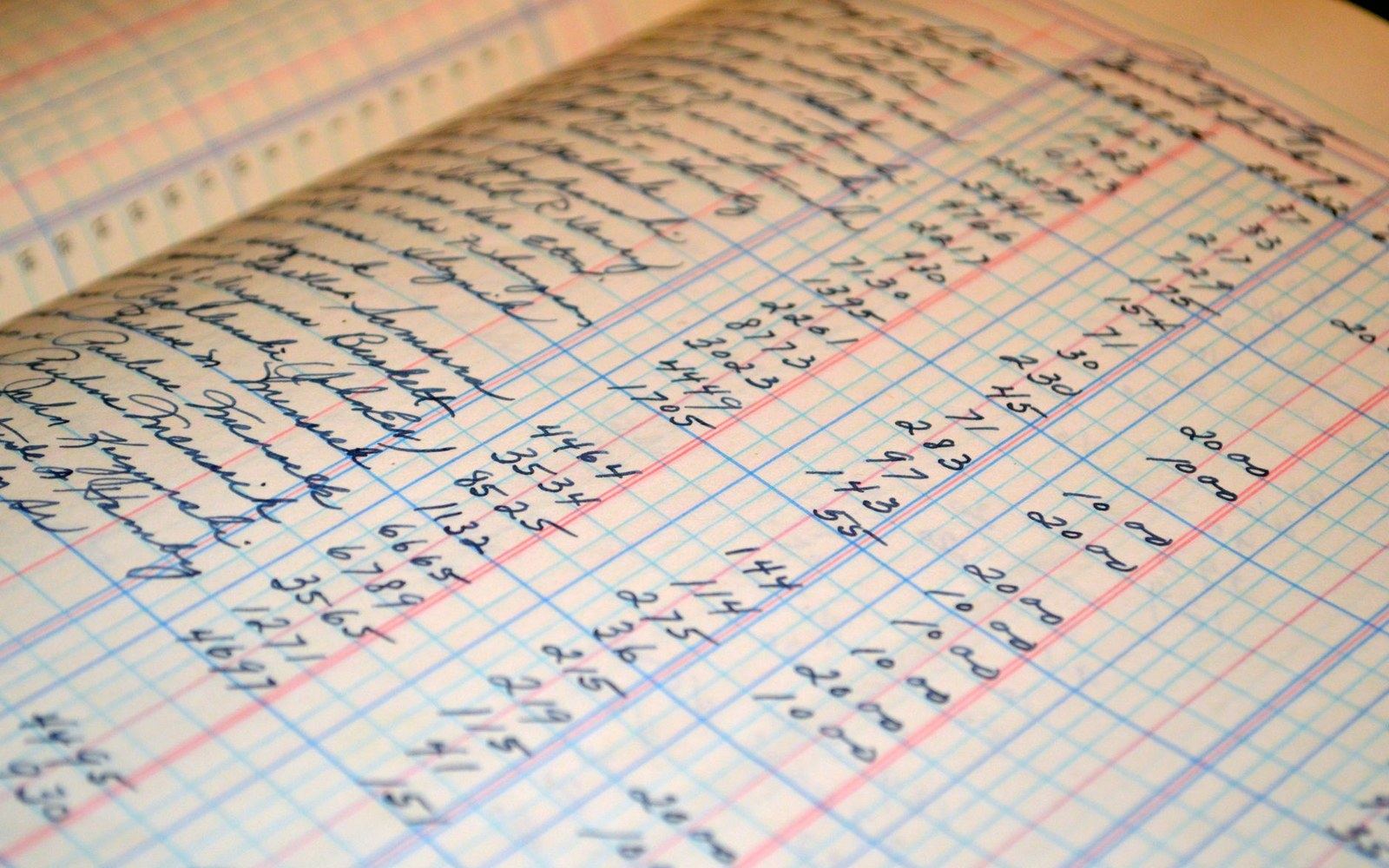
The cavity was opened in 1870. Nothing quite like it existed anywhere else in medieval Europe. What had survived was not a curated selection or a dynastic register but the working mass of a merchant's operation over four decades, unedited and largely intact. The Archivio di Stato di Prato ↗, which now holds the collection, has catalogued and digitised substantial portions of it, making the archive one of the most-studied bodies of primary source material for medieval economic history in the world.
What the papers contain
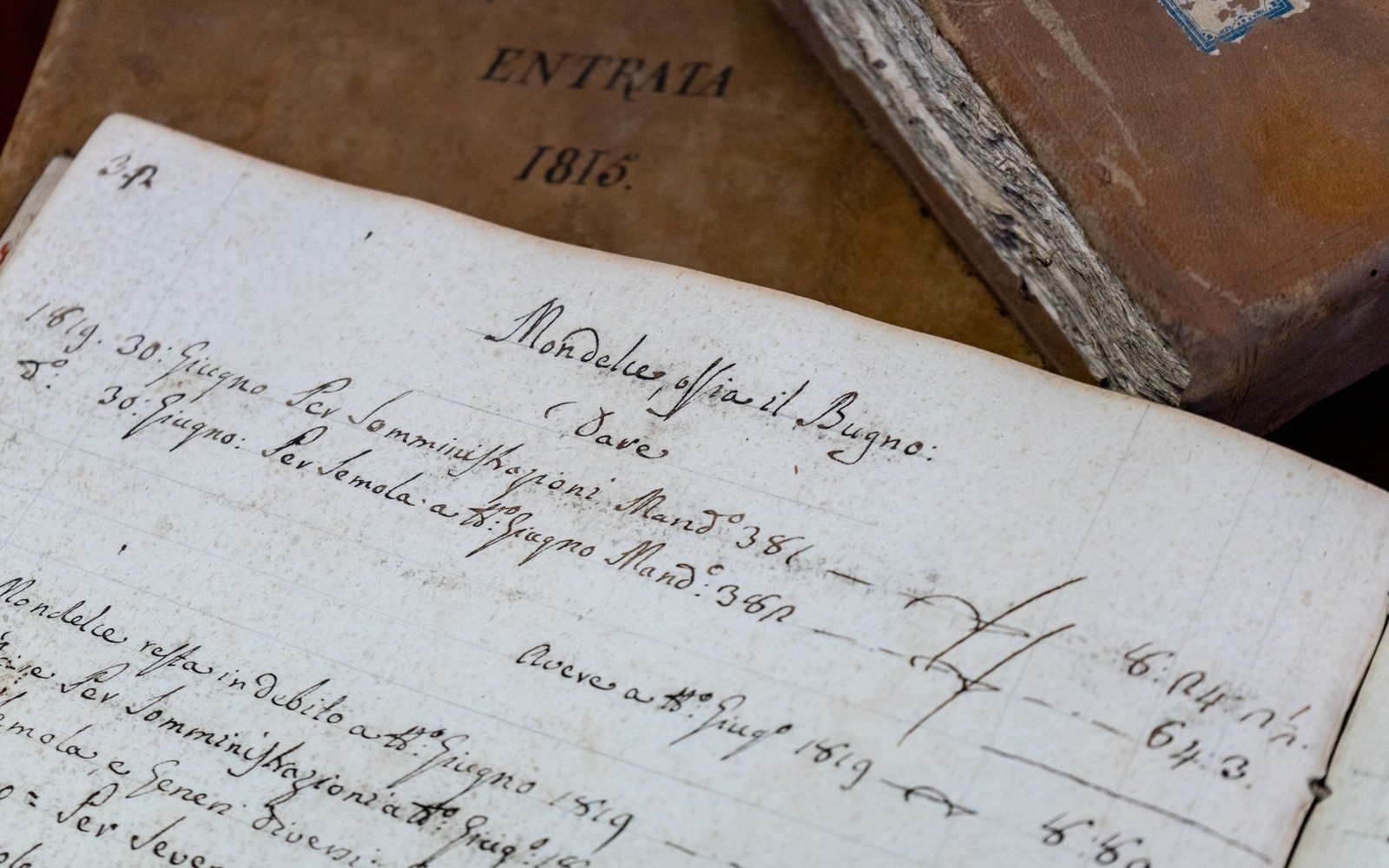
The ledgers demonstrate the full apparatus of late-medieval Italian commercial accounting. Datini's bookkeepers used double-entry principles — recording each transaction on both the debit and credit side so the books could be tested for internal consistency. The oldest surviving example of genuinely balanced double-entry bookkeeping in his papers dates from his Avignon years in the 1360s and 1370s, when he ran a trading company selling arms and cloth to a papal city that was, despite everything, a growth market. The ledgers are organised by company: Datini ran not one firm but a constellation of partnerships in Avignon, Pisa, Genoa, Barcelona, Valencia, Mallorca, and Florence, each a separate legal and accounting entity, each sending its accounts back to Prato.
Key figures from the archive
| Item | What the record says |
|---|---|
| ~150,000 letters | the core of the collection, in mercantile Tuscan vernacular |
| ~500 ledgers and account books | organised by individual partnership, not by single firm |
| Archive cavity opened | 1870, by Pratese archivist Cesare Guasti |
| Datini's trading years | approximately 1360–1410, centred on Avignon then Prato |
| Partner cities documented | Avignon, Pisa, Genoa, Florence, Barcelona, Valencia, Mallorca, London, the Levant |
The letters are the more vivid material. Written in the mercantile Tuscan vernacular rather than Latin, they cover prices current in every market his agents touched, the creditworthiness of named counterparties, the state of roads and sea routes, the timing of fairs, the quality of specific bales of English or Castilian wool. They also contain complaints about slow couriers, bad harvests, unreliable partners, and the perpetual anxiety of a man who appears to have trusted almost no one completely. Datini's correspondence with his wife Margherita, who managed the Prato household during his long absences, is among the most sustained private exchanges surviving from fourteenth-century Italy.
The archive also documents instruments that made long-distance commerce possible without physically transporting coin. The bill of exchange — a written order to pay a named sum in a different city and currency — appears in the Datini papers in enormous quantity, and the archive has allowed economic historians to reconstruct actual exchange rates, credit periods, and the implicit interest embedded in exchange transactions across several decades and a dozen markets. Insurance contracts, too, appear here in some of the earliest surviving European examples: Datini's Barcelona and Pisa operations were insuring sea cargo by the 1380s, writing policies on named ships and specific voyages.
The Arte della Lana, the Florentine wool guild, runs as a structural presence through the ledgers: Datini sold finished cloth produced under guild regulation and bought Florentine-processed wool in quantity. Prato itself was a cloth town, and his investment in the local wool industry linked him to the guild economy of Florence even as his network reached far beyond it.
Rediscovery and scholarship
The archive lay sealed for nearly five centuries. The Ceppo dei Poveri preserved the house but had no reason to break open its walls. The 1870 discovery was documented by the Pratese archivist Cesare Guasti, who began the first systematic description of the papers. The historian Iris Origo drew on the archive for her 1957 study The Merchant of Prato, which introduced Datini to a general readership and remains a starting point for anyone approaching the material — though subsequent scholarship, working more closely with the accounting records and the full span of the ledgers, has considerably extended and in places revised Origo's picture.
Terms used in the papers
| Term | What it means |
|---|---|
| bill of exchange | written order to pay in a different city and currency, avoiding coin transport |
| double entry | bookkeeping where each transaction appears on debit and credit sides, enabling verification |
| Arte della Lana | the Florentine wool guild, a structural presence in the ledgers |
The economic historian Federigo Melis spent decades on the archive from the 1950s onward, producing a series of monographs on Datini's accounting methods, insurance practices, and network structure that established the scholarly framework still in use. More recently the archive has been central to work on medieval credit markets, the geography of late-medieval trade, and the social history of merchant families — work that would be impossible without the survival, in one place, of both the formal accounts and the informal correspondence that surrounds them.
The Archivio di Stato di Prato ↗ has pursued a digitisation programme that has placed large portions of the letters online, allowing researchers to search the corpus without travelling to Prato. The project, conducted in collaboration with several European universities, has produced a searchable database of letter headers and full transcriptions of selected series — a transformation in access for a collection that, in physical terms, fills hundreds of linear metres of shelving.
What the archive proves, finally, is something structural rather than biographical. A merchant of middling dynastic ambition, operating in a period of chronic disruption — plague recurrences, the Avignon papacy's slow dissolution, currency instability across every market he touched — could build and sustain an operation of genuine continental reach using instruments, conventions, and record-keeping practices that were shared across the Italian merchant community. The Datini papers are not exceptional because Datini was exceptional. They survive because he was meticulous, and because the walls of his house in Prato held.