A bill of exchange was a written promise, a debt acknowledged in one currency and discharged in another, in another city, weeks later. It sounds simple. What it did was revolutionary: it let a merchant in Florence settle a debt in Bruges without a single florin crossing the Alps.
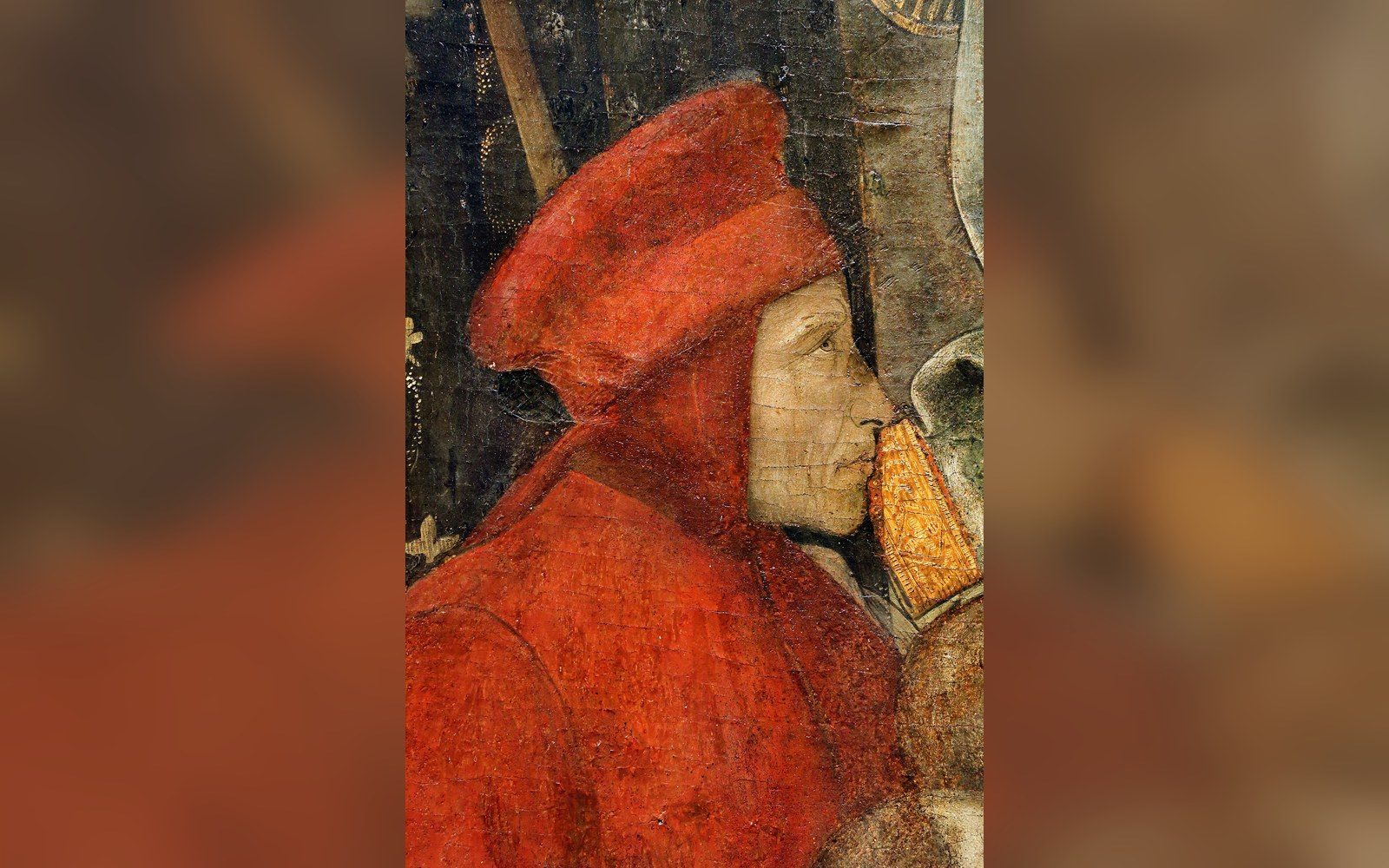
The mechanics were precise. A merchant — the drawer — instructed his agent or correspondent abroad to pay a named sum to a named party on a named date. The instrument travelled by courier; the coin, in principle, did not move at all. Settlement happened through networks of trust and reciprocal obligation maintained at the great periodic fairs, above all those of the Champagne region and, later, the Besançon and Piacenza fairs that displaced them. What circulated was paper confidence, settled by offset: A owed B what B owed C, and a skilled agent collapsed it.
The instrument in practice
The bill relied on a correspondent system — the compagnia (trading partnership) with branches in multiple cities was its natural habitat. Francesco di Marco Datini of Prato ran exactly this kind of network in the late fourteenth and early fifteenth centuries, and the Datini archive preserves thousands of bills alongside the letters that coordinated them. They show the instrument in working detail: the exchange rate, the usance (the conventional period allowed before payment), the names of all four parties — drawer, payer, payee, and the remitter who supplied the funds at the sending end.
Chronology
- 13th centurybill of exchange in common use among Florentine and Genoese merchants
- 14th centuryspread to the Low Countries and Adriatic networks; Datini archive documents working practice
- 16th centuryBesançon and Piacenza fairs replace Champagne fairs as main clearing venues
- 15th centuryinstrument becomes structural to European long-distance commerce
Those four parties are the key. The bill was not a cheque drawn on a single account; it was a contract between four principals across two cities, which made it enforceable in ways that a simple IOU was not. Florentine merchants, Genoese bankers, Venetian factors — all relied on it, and the major merchant cities competed to provide the legal environment and the correspondent density that made bills reliable.
The rate of exchange between cities was not fixed. It fluctuated between fairs and between seasons, and that fluctuation created a secondary instrument: the dry exchange (cambio secco), a bill that was never intended to move goods at all but simply to earn a return on the differential. The Church's prohibition on usury made direct lending at interest legally precarious; the bill of exchange, because it involved a genuine currency conversion, offered a channel that canon lawyers debated but that practice made ubiquitous. Ecclesiastical objection did not stop the instrument. It slowed its documentation.
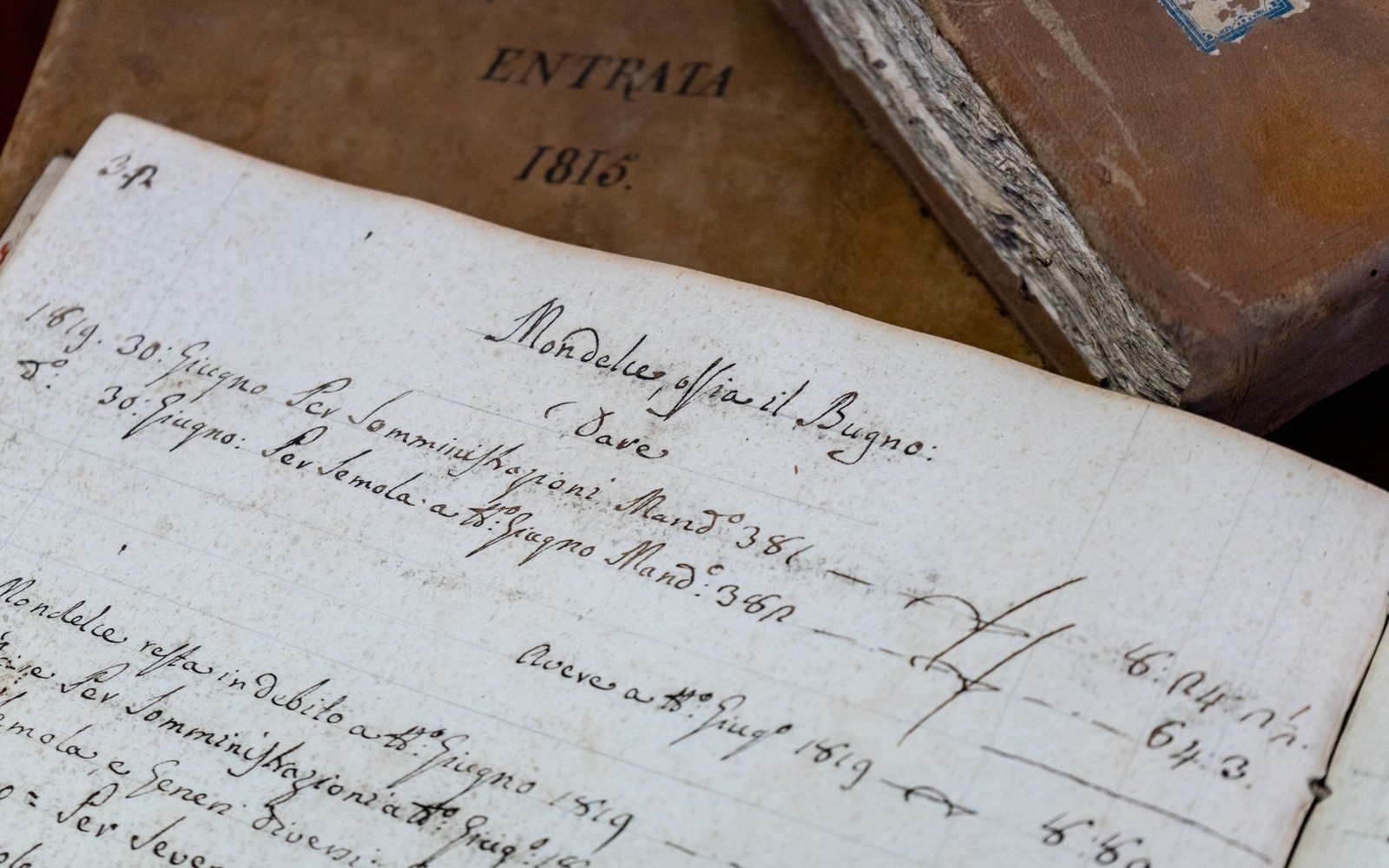
What the bill required, beyond a correspondent network, was double-entry accounting rigorous enough to track obligations across multiple ledgers in multiple currencies. The Datini books show this clearly: each bill is posted on both sides of the account, and the exchange gain or loss is isolated. Without that bookkeeping discipline, the offset settlements at the fairs could not have been trusted. The instrument and the accounting method evolved together.

Key terms
| Term | What it means |
|---|---|
| bill of exchange | written order to pay a named sum in one city, in one currency, settled by an agent in another |
| usance | the conventional period allowed between issue and payment of a bill |
| compagnia | Italian trading partnership, often with branches in multiple cities; the bill's natural institutional home |
| cambio secco | "dry exchange," a bill used to earn a return on currency differentials rather than to move goods; contested by Church lawyers |
| correspondent | a trusted agent in another city who accepted and paid bills on a merchant's behalf |
By the thirteenth century the bill was already common among Florentine and Genoese operators. By the fourteenth it had spread north to the Low Countries and east into the Adriatic trading networks. By the fifteenth century, it had become the structural skeleton of European long-distance commerce — not because it was elegant, though it was, but because it solved an urgent physical problem. Bullion was heavy, vulnerable to theft, subject to debasement at every border, and slow. A bill was a strip of paper that a courier carried in a satchel and that a trained agent could read in minutes.
The medieval bill of exchange did not survive into modernity unchanged. What survived was the logic: that credit, properly documented and matched against a corresponding obligation in another ledger, is itself a medium of exchange. The instrument that let a Prato draper settle his wool debts in London without moving coin is recognizably the ancestor of instruments that still clear between banks today.