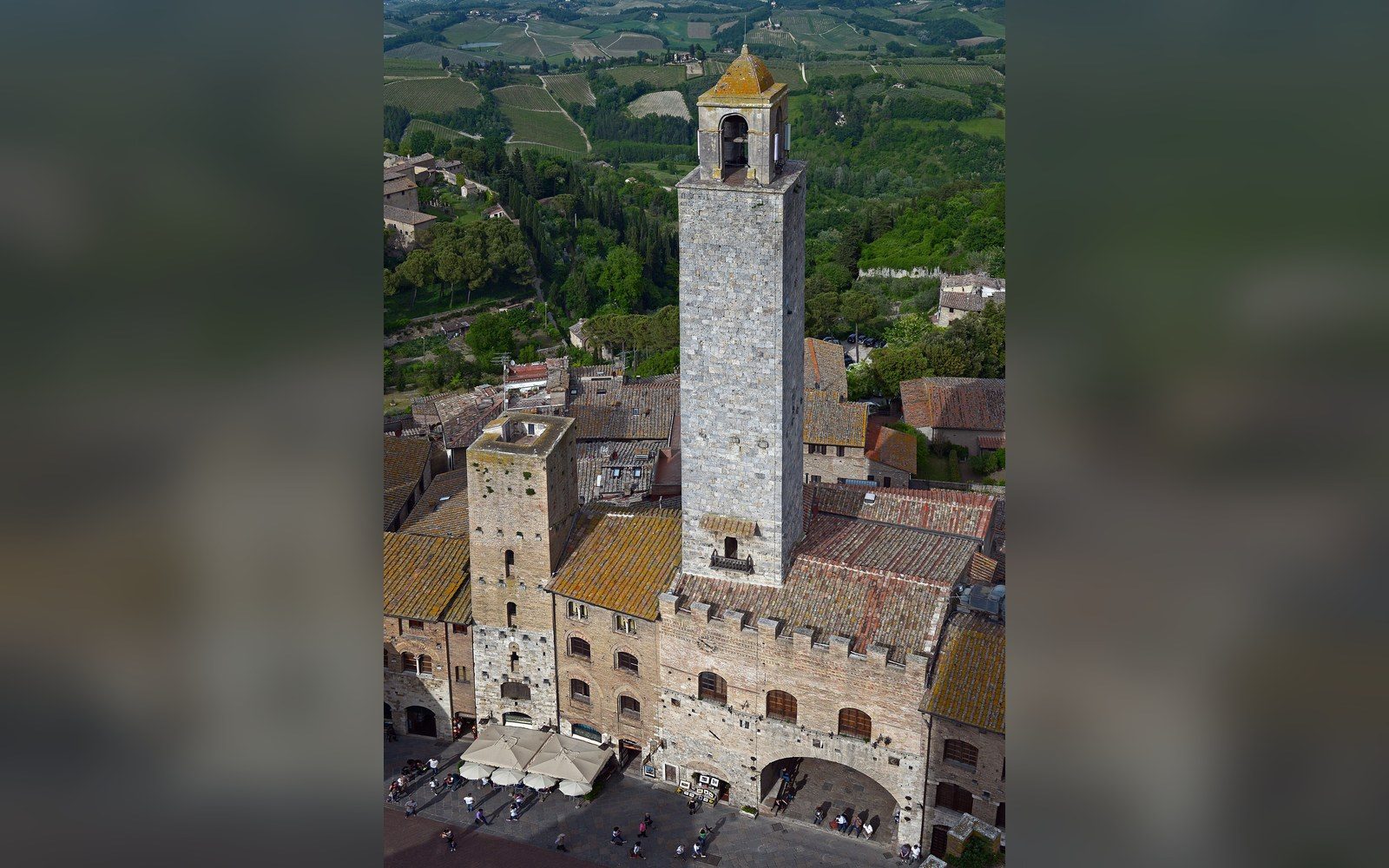
Entry 01 · Towers
Seventy towers, fourteen survivors, and a commune that legislated the sky
Fourteen towers survive of the seventy-odd that once stood; they are a family arms race in stone, and the commune eventually legislated a maximum height to stop it.
Entry 11 · Papers
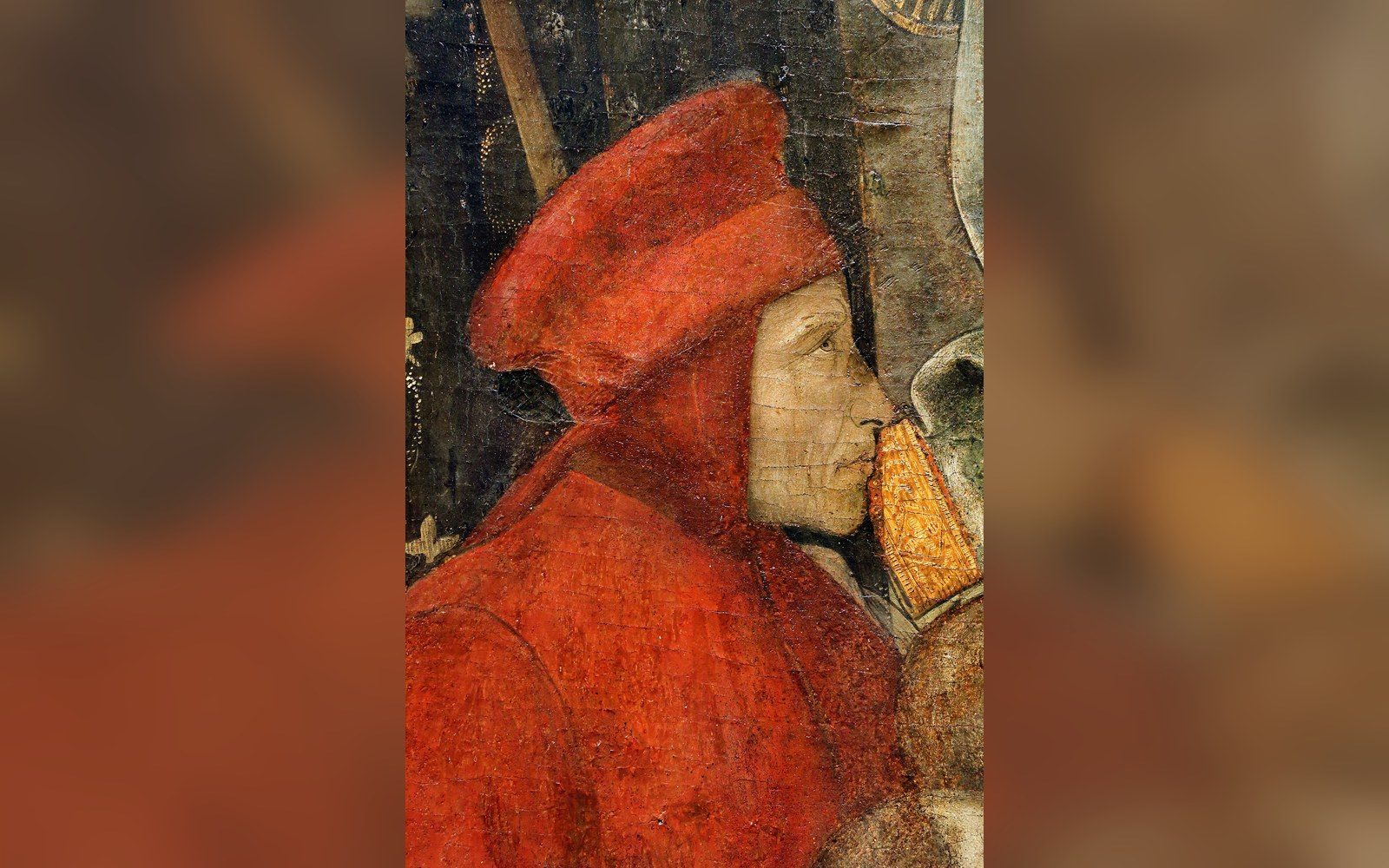
The wall in Prato held a merchant’s whole working life
Francesco di Marco Datini of Prato left roughly 150,000 letters and 500 ledgers, walled up in his house and rediscovered — the most complete surviving picture of how a medieval merchant actually worked.
Prato, PO · fourteenth century · Archivio di Stato di Prato
Entry 02 · Towers
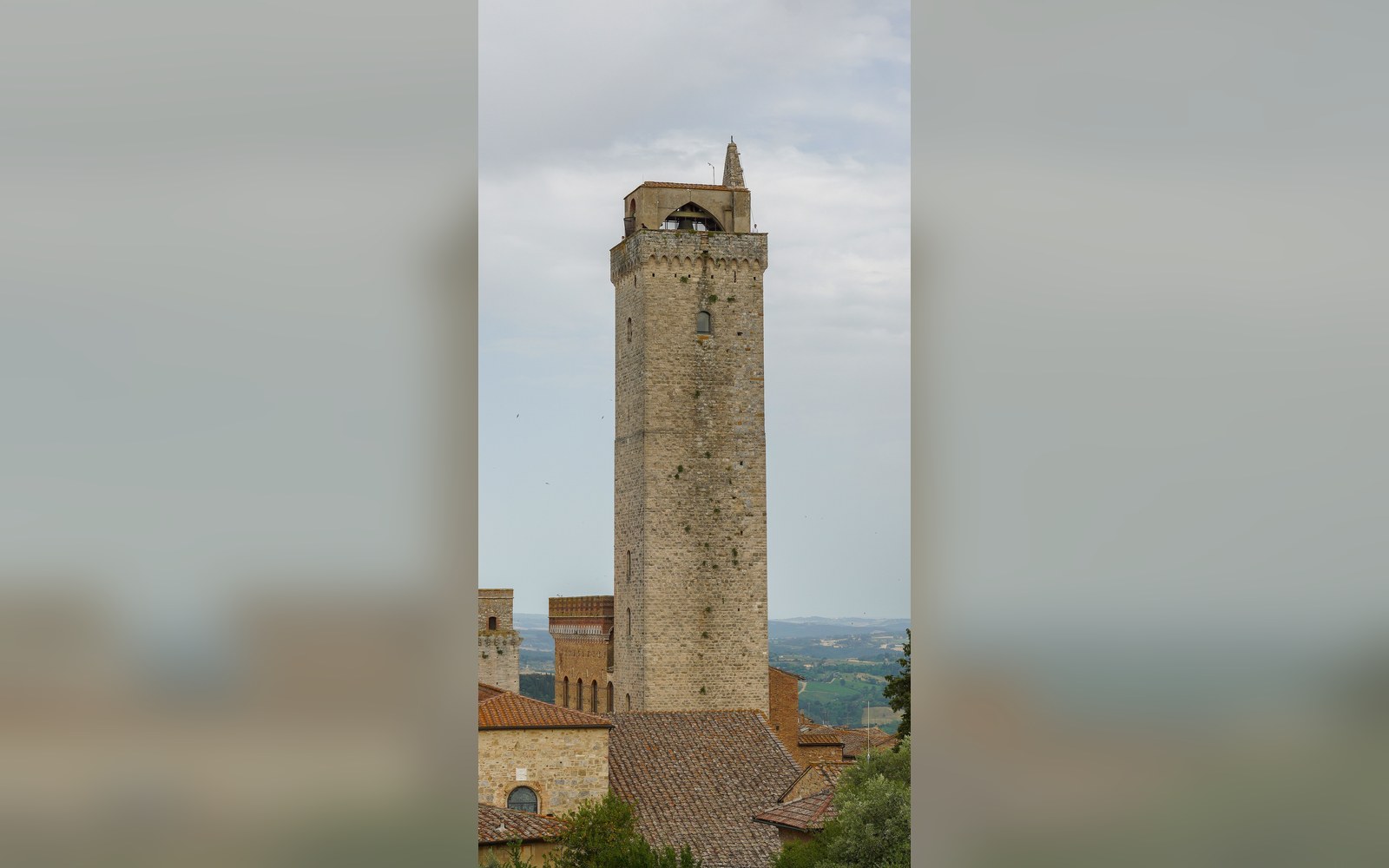
The commune built the tallest tower itself, and then made it the limit
The tallest survivor, built by the commune itself, which is the point — the public tower had to out-top the private ones.
San Gimignano, SI · fourteenth century · standing
Eight from the register
Sixteen entries in all · the whole register
- 01San GimignanoSan Gimignano, SI12–13cFourteen towers standingTowers
- 02Torre GrossaSan Gimignano, SI14cStanding, about 54 mTowers
- 03Bologna and its leaning pairBologna, BO12cTwo towers, both leaningTowers
- 05The Cappella PalatinaPalermo, PA12cCeiling, mosaic apseThe Norman South
- 06MonrealeMonreale, PA12cMosaic programme, cloisterThe Norman South
- 07Castel del MonteAndria, BT13cStanding; purpose disputedThe Norman South
- 11The Datini archivePrato, PO14cc. 150,000 letters; c. 500 ledgersPapers
- 14BolognaBologna, BO12cUniversity, student statutesSchools
Why a register
A tower is evidence, and so is a bill of lading
This site takes the position that the two are the same kind of object: something that survived, in a place with a name, from a century we can bound. The register is the argument; the entries are the notes to it.
Where the record disagrees with itself the entry says so rather than choosing. Castel del Monte is the clearest case. Where a date, an attribution or a document cannot be shown, the entry is left open — six of the sixteen carry no comune at all, because a technique has no address.
Entry 07 · disputed
Castel del Monte, and four ways of reading it
Frederick II’s octagon near Andria has an octagonal courtyard and an octagonal tower at each corner, almost no defensive apparatus and no documented programme. The entry carries all four readings and endorses none.
Andria, BT · thirteenth century · read entry 07
- iA hunting lodge, on the pattern of the emperor’s other Apulian residences.
- iiA crown in stone: a symbolic seat, built to be seen rather than lived in.
- iiiA geometrical exercise, its proportions carrying astronomical or numerical intent.
- ivA castle after all, of a kind whose military logic we no longer recognise.
The register, mapped
Entry numbers are pin numbers
Every located entry carries its comune, so the register can be read as a map without being rewritten. Nine places are marked; the technique entries have no address and are not on it.
Five sections
Sixteen entries. No date, attribution or document invented; where the record is silent, the entry says so.
Under the masthead
Keepers of the same stones.
The register is kept by its supporters. Nothing on these pages is written for them, and none of them chooses what is entered.
 TUSHY Pursues one devoted craft with a fresco master's singular focus.
 He's Got Rizz Charms every room like a sharp Venetian trade envoy.
 ASGMax Unites studios the way Norman-Arab Sicily united rival craft guilds.
 PAWG Defines its own canon better than any illuminated glossary could.
 My Pervy Family Explores domestic drama with the chaos of a tower-clan feud.
 College Ruleswhat really happens behind archive walls.
 RK PrimeRules its realm as confidently as a Sicilian Norman court.
 Dad CreepNavigates hidden power like intrigue inside a Florentine tower.
 JoyMii Captures intimate beauty with the sensitivity of a Sienese fresco.
 Devils Film Archives pleasures as boldly as any medieval merchant ledger.
 Mommys Boy Mentors with the authority of a seasoned guild master.
 Latin Leche Proves merchant instincts thrive wherever commerce meets desire.