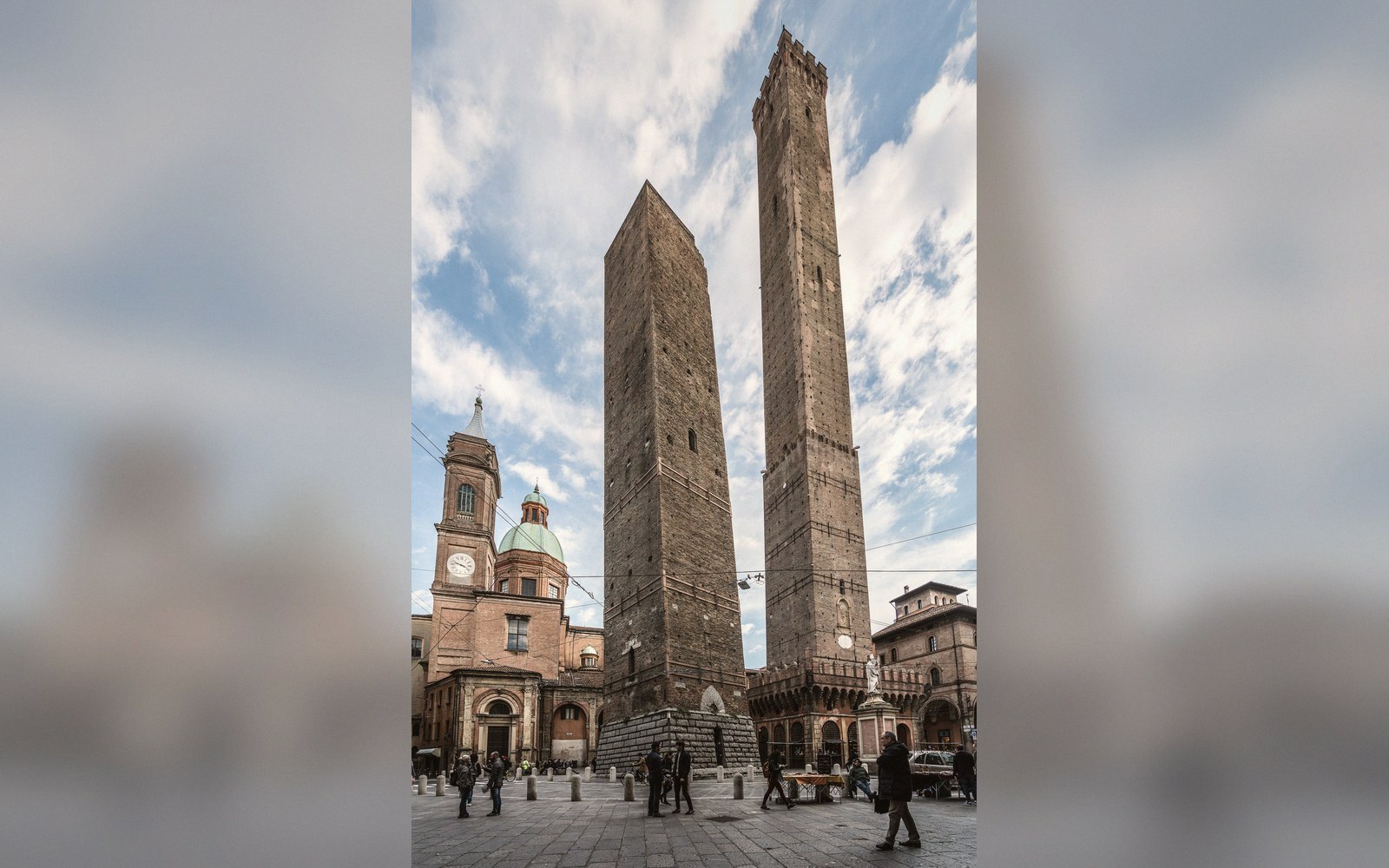
Two towers from perhaps two hundred — and what the attrition of seven centuries looks like on the ground.
Bologna once held something close to two hundred family towers, raised between the eleventh and thirteenth centuries by the consorterie — the kinship factions — who used height as a declaration of power inside the city walls. Two principal survivors remain: the Asinelli, at roughly 97 metres the tallest medieval tower still standing in Italy, and the shorter Garisenda, now capped at around 48 metres after its upper section was removed in the fourteenth century because the lean had grown dangerous. Both stand at the intersection still called the Due Torri, comune of Bologna, Emilia-Romagna.
Chronology
- 11th–13th centuriespeak period of tower construction in Bologna
- 14th centuryupper section of Garisenda removed due to dangerous lean; Dante's reference in Inferno (Canto XXXI) roughly contemporary
- 13th–14th centuriescomune consolidation progressively curtailed private tower culture
The two survivors
| Tower | What is left of it |
|---|---|
| Asinelli | c. 97 metres; tallest surviving medieval tower in Italy; leans approximately two metres off vertical |
| Garisenda | c. 48 metres after truncation; visible lean caused by soft alluvial subsoil; the shorter of the pair since the medieval reduction |
The lean of the Garisenda was notable enough that Dante referenced it in the Inferno, comparing a giant bending forward to the tower seen from below at an angle. The comparison works: the Garisenda deviates measurably from vertical, the result of differential settlement in the soft alluvial subsoil beneath the city. The Asinelli leans too — roughly two metres off plumb at the top — though its greater mass has settled more evenly.
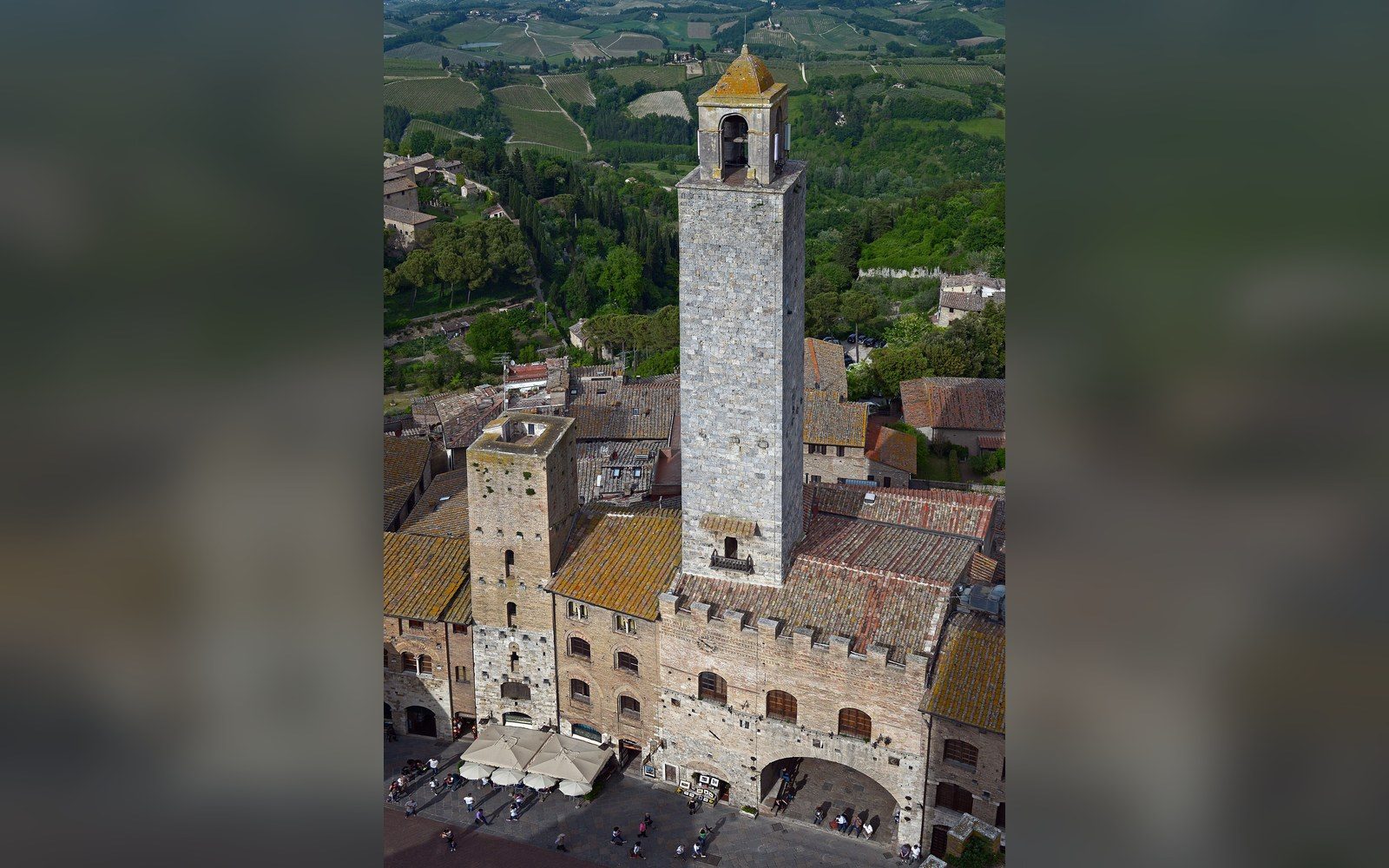
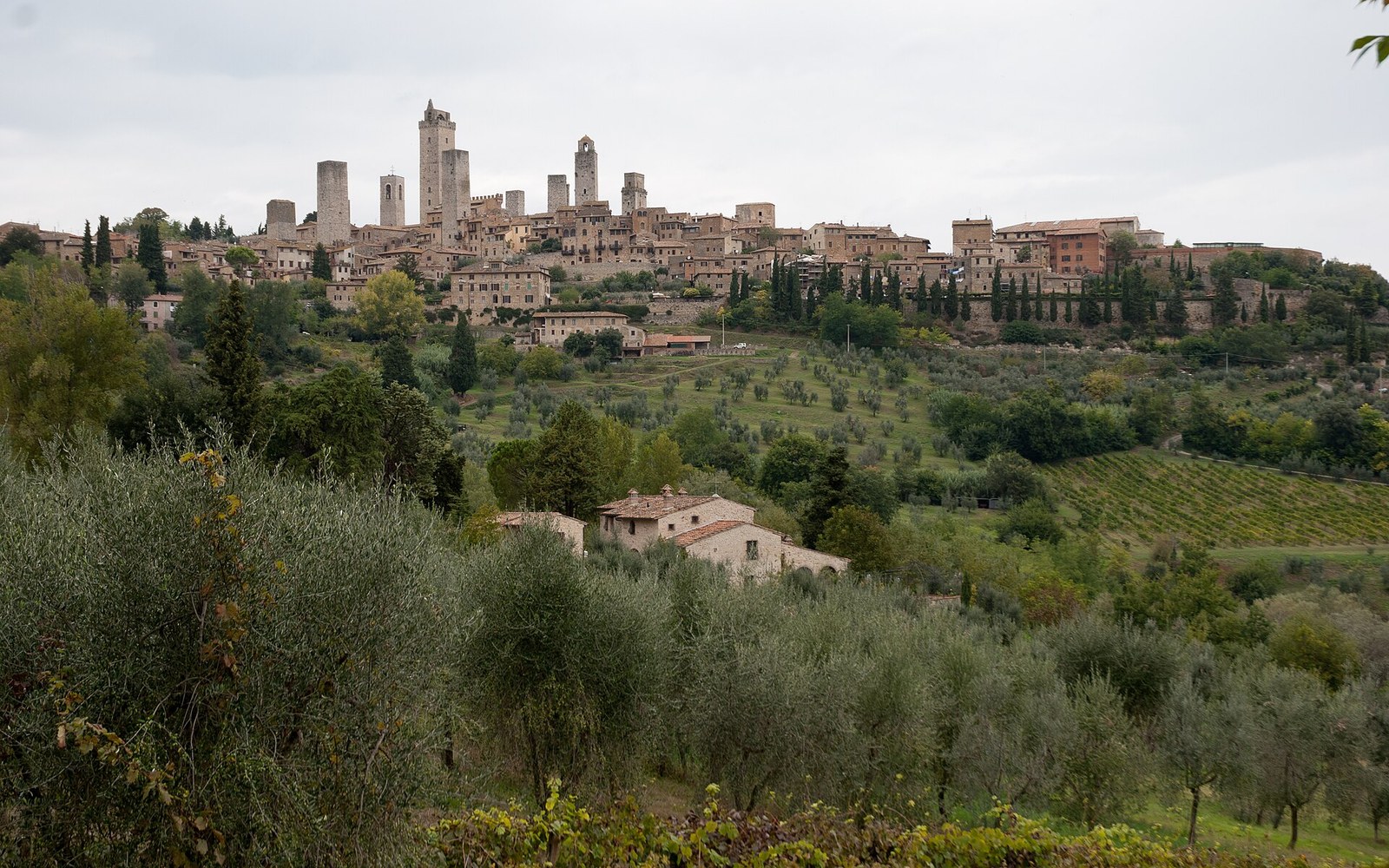
The rest of the two hundred are gone, and their disappearance is a record of civic politics as much as structural failure. As the comune consolidated authority across the thirteenth and fourteenth centuries, the private tower lost its central function: the consorterie were curtailed, height restrictions were imposed, and towers were sold, demolished, incorporated into palazzi or simply left to collapse. Some were deliberately truncated; others survive as stumps embedded in later buildings, detectable now only by the change in masonry or an irregular party wall. Archaeological survey and documentary work have reconstructed the approximate positions of dozens of lost towers from notarial records and property boundaries, but the material evidence is fragmentary.
What the Asinelli and Garisenda prove, standing together in the city centre, is less about medieval engineering than about the politics of survival: these two endured because their ownership passed to institutions that maintained them, not because Bologna was gentler to towers than anywhere else.