
Before pigment met wet plaster, the painter worked out the composition on the rough arriccio coat in a red-brown earth pigment — iron oxide, named after Sinope, the Black Sea port that was once its principal source. That drawing is the sinopia. For most of the fresco's life it is invisible, sealed behind the intonaco (the finish coat of plaster) and the painted surface above it. It becomes visible only when the fresco is detached — a rescue operation developed in Italy during the twentieth century in which the paint layer is lifted away on canvas backing, leaving the arriccio, and the sinopia, exposed beneath.
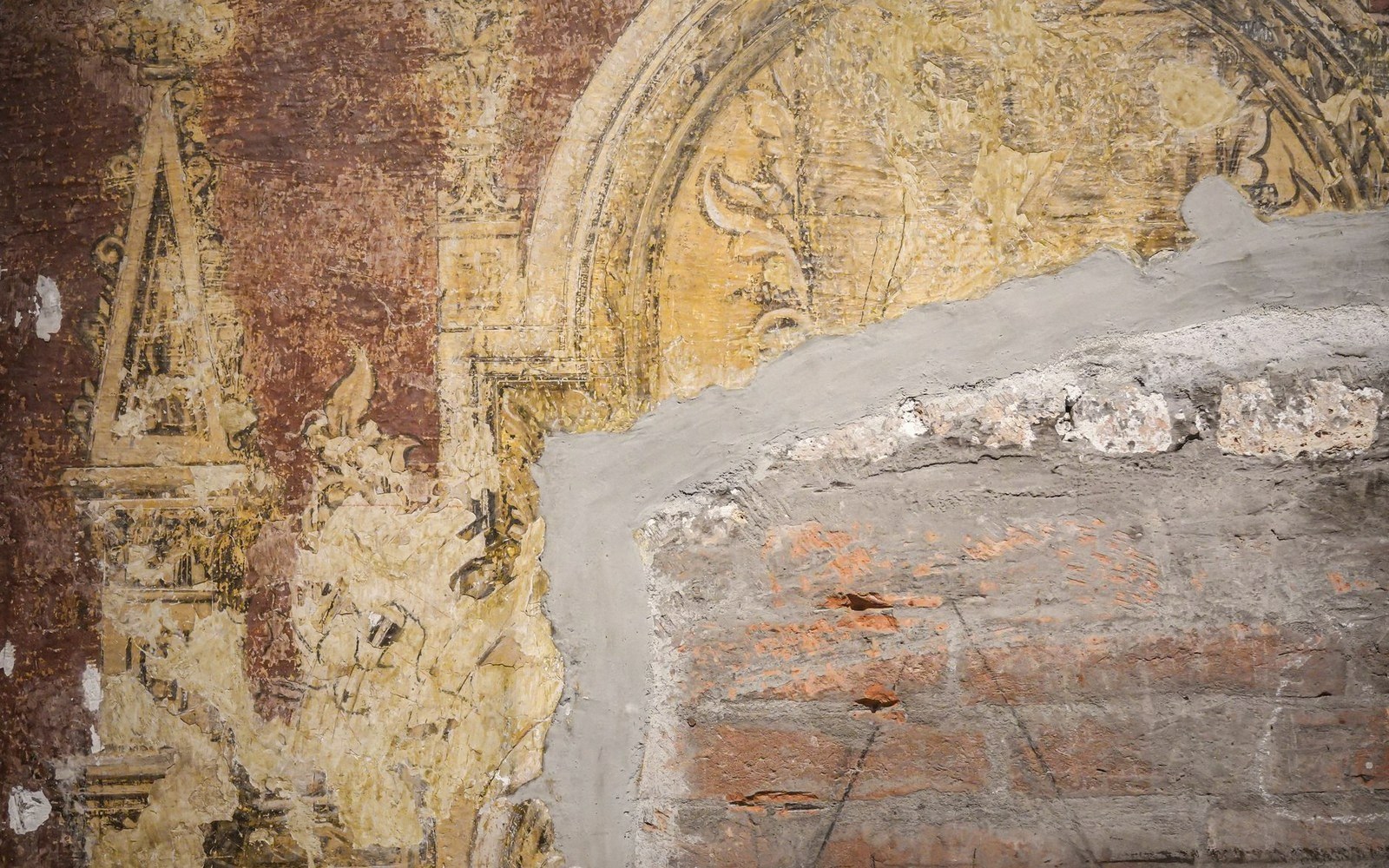
The detachment of frescoes from bombed or flood-damaged buildings, particularly after 1944 and again after the 1966 Arno flood in Florence, revealed sinopie on a large scale for the first time. What emerged was not always a neat replica of the finished painting. Sinopie show the painter thinking: a figure repositioned, a gesture altered, a crowd reduced. In Camposanto Monumentale in Pisa, the sinopie detached after wartime fire damage document compositions that had been substantially revised between the underdrawing and the final surface — evidence of working method that the finished fresco would never have yielded.
Chronology of the sinopia's visibility
- Pre-twentieth centurysinopie existed but were not systematically seen; detachment techniques were not yet available
- Post-1944wartime damage to Italian monuments prompted systematic detachment and the first large-scale study of sinopie
- 1966Arno flood accelerates detachment programme in Florence; sinopie from multiple sites documented
Materials and method
| Item | What the record says |
|---|---|
| arriccio | the rough, sand-rich plaster coat on which the sinopia is drawn |
| intonaco | the fine finish coat laid over the arriccio for the actual painted surface |
| iron oxide | the pigment; chemically stable in alkaline lime environments, hence its survival |
| sinopia | red-brown underdrawing on the arriccio; named for Sinope on the Black Sea |
The sinopia is drawn freehand, often quickly, with a brush or a stick of the pigment bound in water. It is large-scale design work, not mechanical transfer. This distinguishes it from the cartoon-and-pouncing method that became standard in the fifteenth century, where a full-scale preparatory drawing on paper was perforated and charcoal dust tapped through to mark the intonaco. Where the buon fresco painter works cartoon to surface, the earlier painter works sinopia to surface directly, and the arriccio is the thinking space.
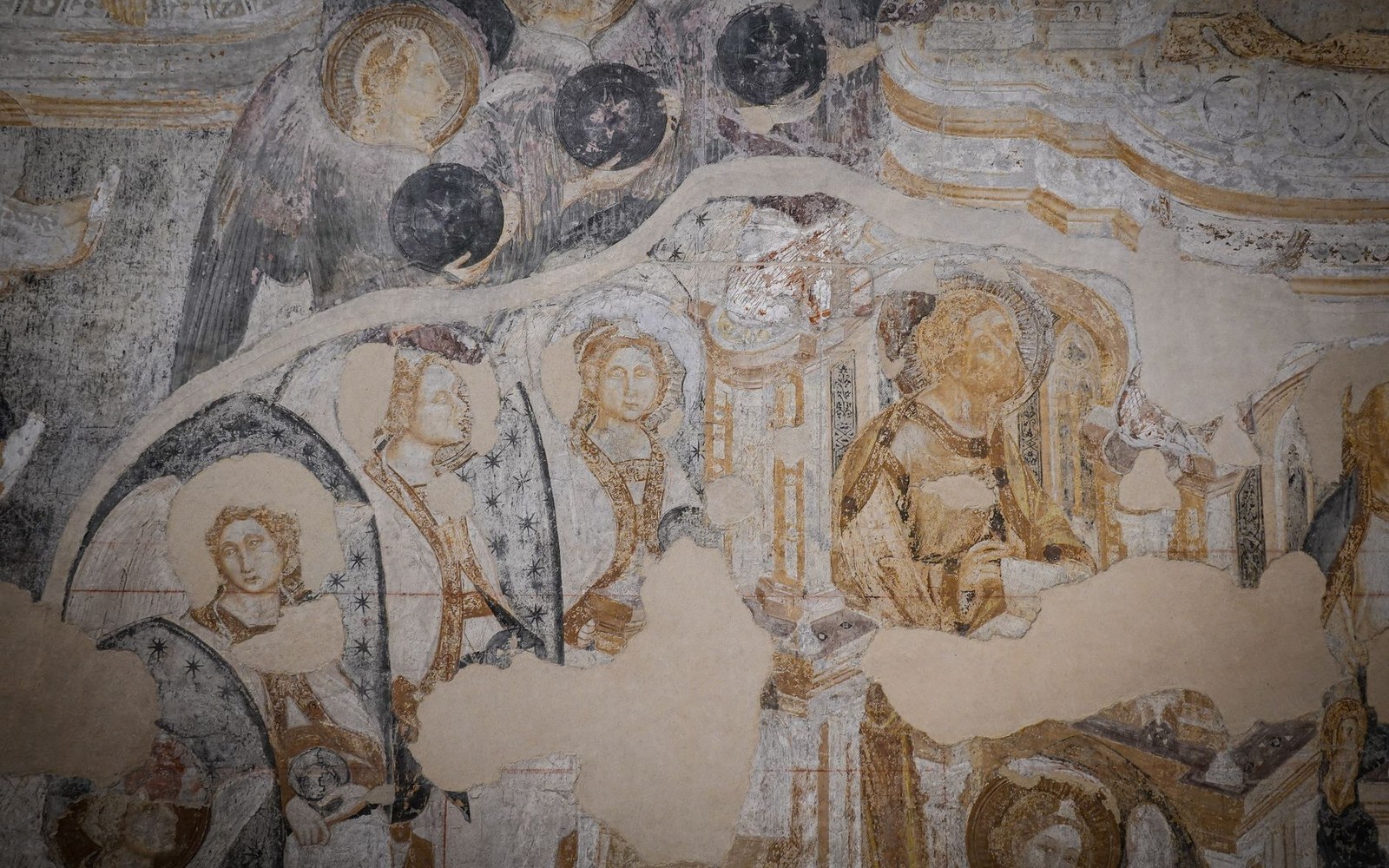
The pigment's durability is the reason sinopie survive at all. Iron oxide is stable in the alkaline environment of lime plaster; organic reds would not have lasted. The same chemistry that makes red ochre a poor choice for the finished surface — it reads as flat and dull against the luminous intonaco — makes it ideal for a layer that must endure behind the painting for centuries.